
Loading...
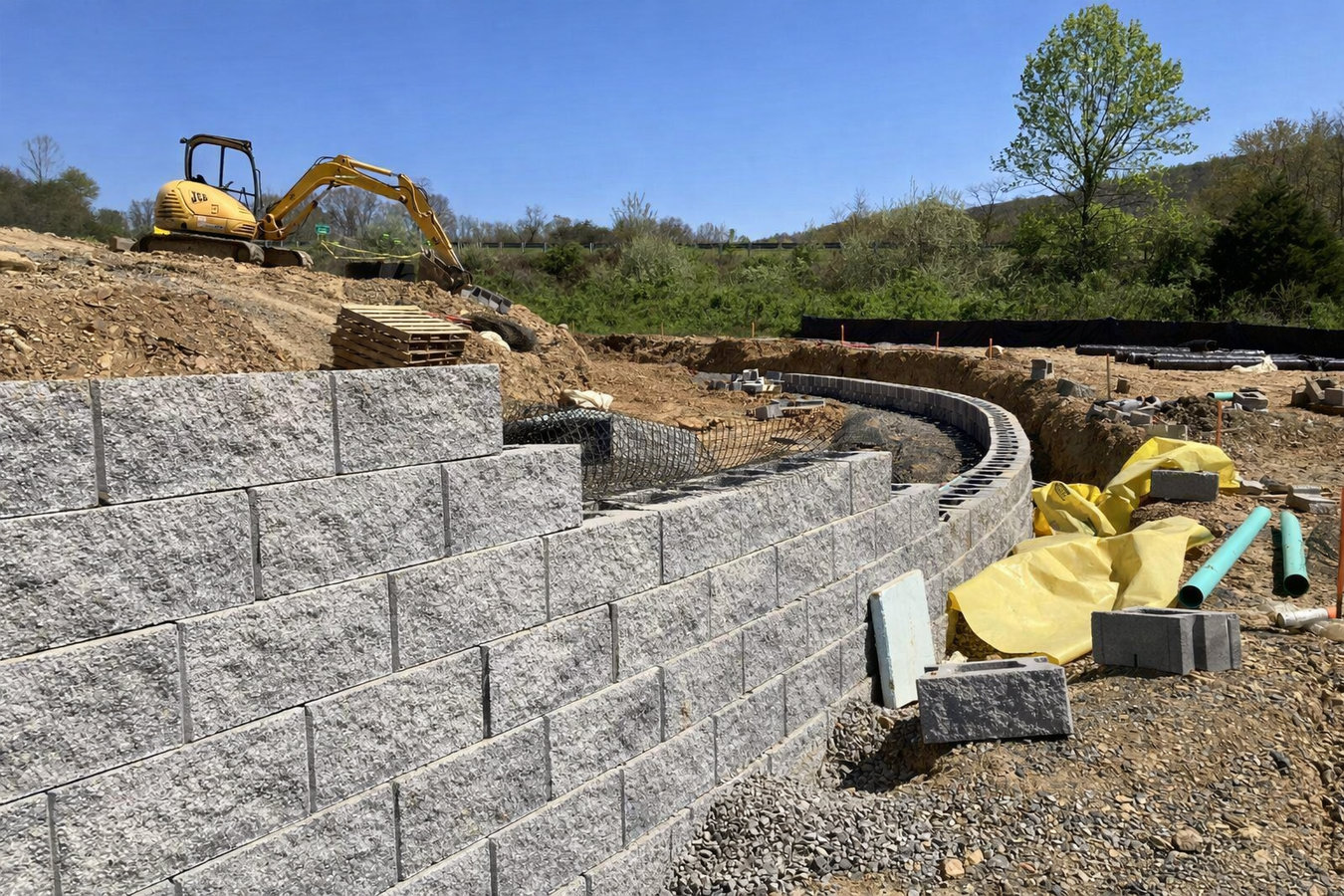
A sloped yard losing ground every winter, or an old wall slowly leaning away from the hill - we build retaining walls that hold, drain correctly, and handle Antioch's clay soil year after year.
Retaining wall construction in Antioch, CA means excavating a footing deep enough to anchor the wall against clay soil movement, building up the wall course by course using concrete block or natural stone, and installing drainage behind it so water does not build up and push the wall out - most residential walls take two to five days to complete once the crew is on site. The wall holds soil in place on sloped lots, creates flat usable space, and protects your home from erosion and water damage that builds up over multiple rainy seasons.
If your yard has an existing concrete block structure that needs repair rather than replacement, our masonry restoration service can assess whether the wall can be rebuilt in place or needs to come down. We will give you a straight answer on which approach makes more sense for your situation.
We manage permits through the City of Antioch Community Development Department when required - which is the case for most walls taller than four feet. A permitted wall means a city inspector independently verifies the work, and that matters if you sell your home later.
If soil is creeping down a slope in your yard after Antioch's winter rains and collecting against your fence, driveway, or foundation - that is a clear sign the ground needs to be held in place. Left alone, erosion gets worse each wet season and can eventually undermine nearby structures. A retaining wall gives the soil a permanent boundary.
A retaining wall tilting away from the slope it holds, or showing horizontal cracks across its face, is under more pressure than it can handle. This is especially common in Antioch's clay soil, where seasonal swelling puts constant force on older walls. A leaning wall does not correct itself - it will eventually fail, and the damage to surrounding structures gets expensive.
When a slope beside or behind your home funnels rainwater toward your foundation, wet spots in your garage, damp crawl spaces, or water stains along the base of exterior walls are often the result. Antioch's winter storms can deliver several inches of rain quickly, and a retaining wall with built-in drainage redirects that water away from your home.
Many Antioch homes built in the 1980s and 1990s used timber or railroad-tie retaining walls, which have a limited lifespan. If your wooden wall is soft to the touch, has visible rot, or has posts that are leaning, it has reached the end of its useful life. Replacing it now with concrete block or stone gives you decades more service without the ongoing maintenance.
Retaining wall work is not a single product - the right approach depends on your slope height, soil conditions, available space, and budget. We build new walls from the footing up using concrete block, natural stone, or brick, and we replace failing timber or older masonry walls that have reached the end of their useful life. For yards with steep drops, tiered terracing using a series of shorter walls can be a more cost-effective solution than a single tall wall. When the project involves a larger structure, concrete block wall construction provides a strong, long-lasting option with predictable costs.
Drainage is never optional on our projects. We install gravel backfill and perforated drain pipe behind every wall so water has a clear path to escape instead of building up and pushing outward. We also help homeowners in HOA-governed neighborhoods navigate design approval requirements before finalizing materials, so the finished wall meets every requirement the first time. For a complete yard transformation, retaining walls work well alongside masonry restoration of existing structures on the same property.
Best for homeowners wanting a durable, cost-effective wall that handles clay soil pressure and lasts 50 or more years with minimal maintenance.
Best for homeowners who want the wall to be a design feature as well as a structural element - especially on visible slopes facing the street or a patio.
Best for steep slopes where a single tall wall would require permits and engineering, and where splitting the height across two or three shorter walls reduces cost and complexity.
Antioch sits on clay-heavy soil that swells with winter rain and contracts through the dry summer, putting constant seasonal pressure on anything that holds that soil in place. Many of the hillside neighborhoods in eastern Antioch - developed in the 1990s and 2000s along the corridor near Lone Tree Way and Deer Valley Road - have original timber or concrete walls approaching the end of their design life. Add Antioch's wet-dry climate cycle to that aging infrastructure and you get walls that show up in distress faster than homeowners expect. The California Geological Survey documents expansive soil hazard zones across Contra Costa County - the same conditions that make drainage design non-negotiable on every wall we build here.
We work with homeowners across Concord and Martinez who face the same soil and slope challenges common throughout the East Bay. If you are also in an HOA neighborhood - very common in Antioch's newer subdivisions - we help you confirm material and height approvals with your association before the estimate is finalized, so you do not end up redoing work at your own expense.
We respond within 1 business day. We schedule a free site visit to look at your slope, soil, and any existing walls. You describe what you want the space to do when the project is done - not just what the wall needs to fix.
You receive a written estimate breaking down labor, materials, excavation, and any permit costs. If your wall will be taller than four feet, we explain the permit process upfront and handle the application with the City of Antioch Community Development Department.
The crew digs out the base of the wall area and builds a solid footing. This is the most disruptive part of the job - expect machinery and excavated soil for one to two days. We call 811 before any digging to have underground utilities marked.
The wall goes up course by course while drainage material is installed behind it. After completion, the crew backfills and grades the area. If a permit was required, a city inspector signs off on the finished work before the project is officially closed.
Free on-site estimate. Permit handling included. No obligation.
(925) 503-1246Water pressure behind a retaining wall is what causes most failures, and we install gravel backfill and perforated drain pipe on every project. We will explain the drainage plan on your written estimate so you can see exactly how water will move away from the wall during heavy rain.
Antioch's clay soil moves more than most, and a footing that works in sandy ground will not hold here. We size the footing depth based on your site conditions - not a generic minimum - because that is what keeps the wall plumb through decades of wet seasons.
For walls requiring city approval, we handle the permit application, communicate with the City of Antioch Community Development Department, and schedule the inspection. The International Masonry Institute trains masonry workers in the standards we follow on every project.
When you call about a wall that is leaning or cracking, we give you a straight assessment of whether it can be repaired or needs to come down. We do not recommend replacement when a targeted repair will solve the problem. ACH Antioch Masonry has been building and repairing masonry structures across Antioch and the East Bay since 2018.
We walk every finished project with you before the crew leaves so you can see the drainage, confirm the grade, and ask any questions while the team is still on site. A written warranty covers both labor and materials.
Existing masonry walls and structures losing their strength or appearance? Restoration returns them to solid, weathertight condition.
Learn MoreNeed a solid concrete block wall for property division, security, or structural support? We build them to code on Antioch lots.
Learn MorePermit review takes time - starting now means the wall is done and inspected well before November rains arrive.